
Last updated November 21, 2026
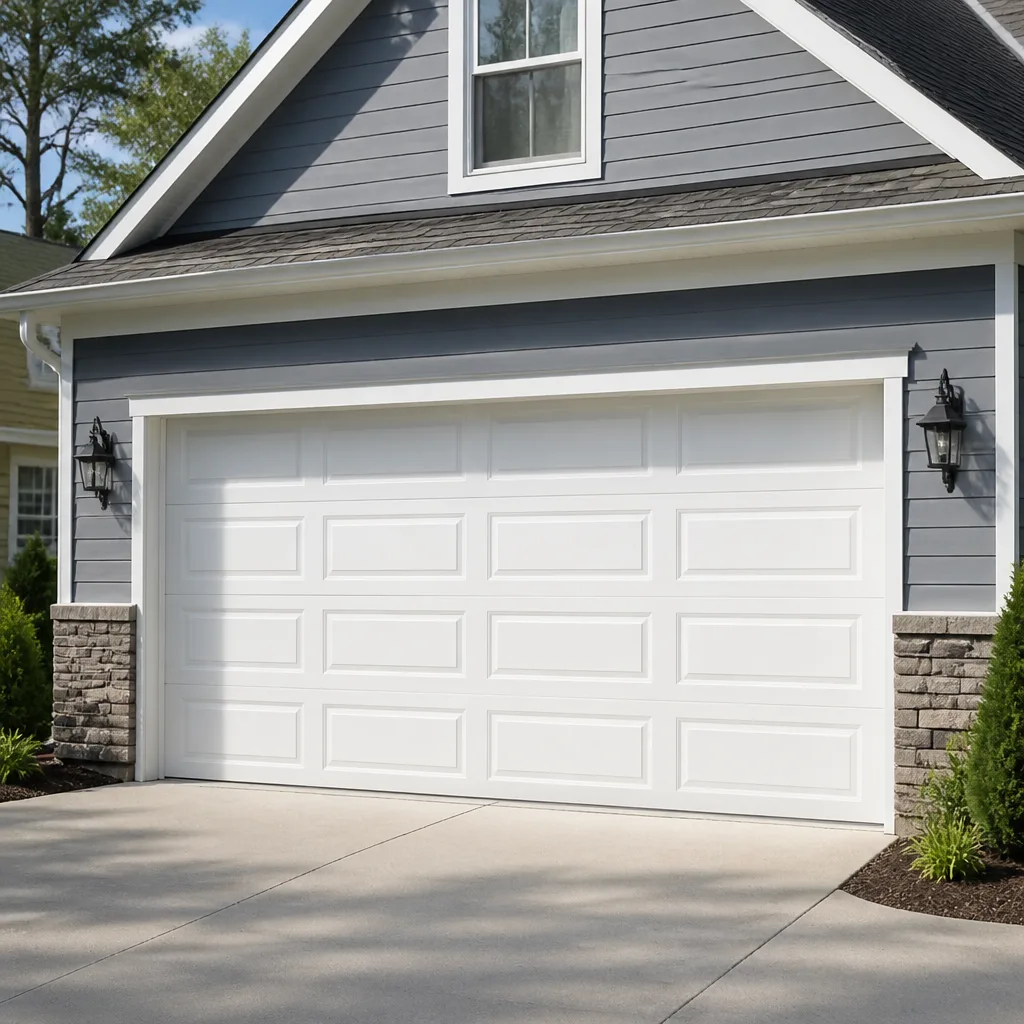 Raised-panel steel
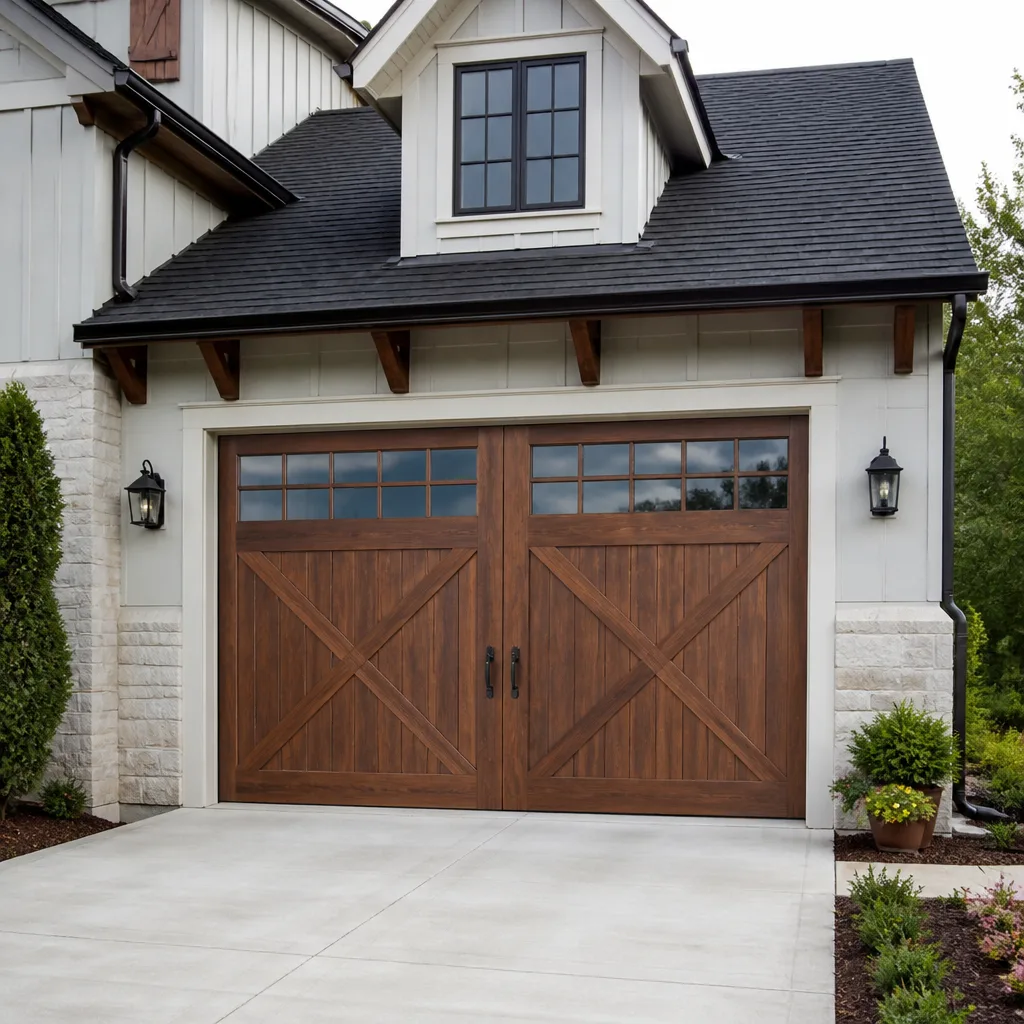 Carriage house
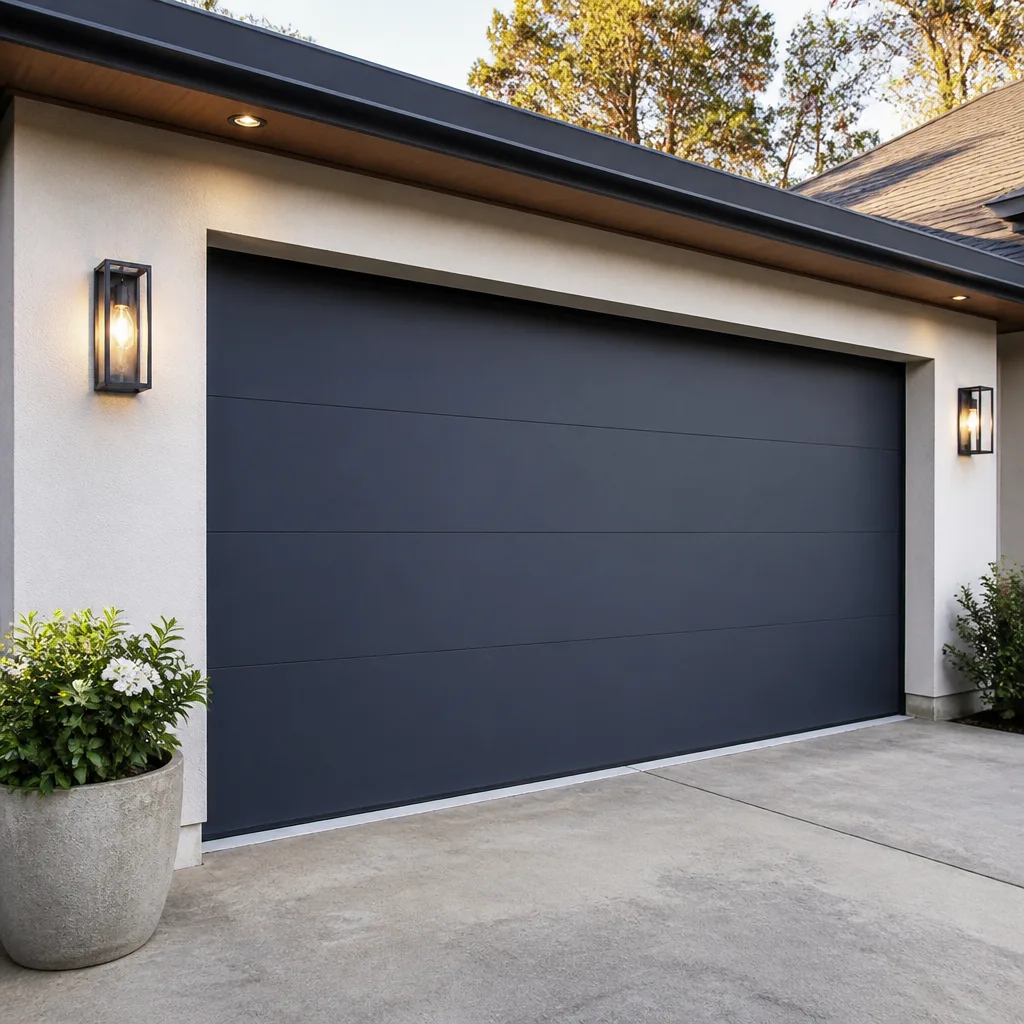 Modern flush
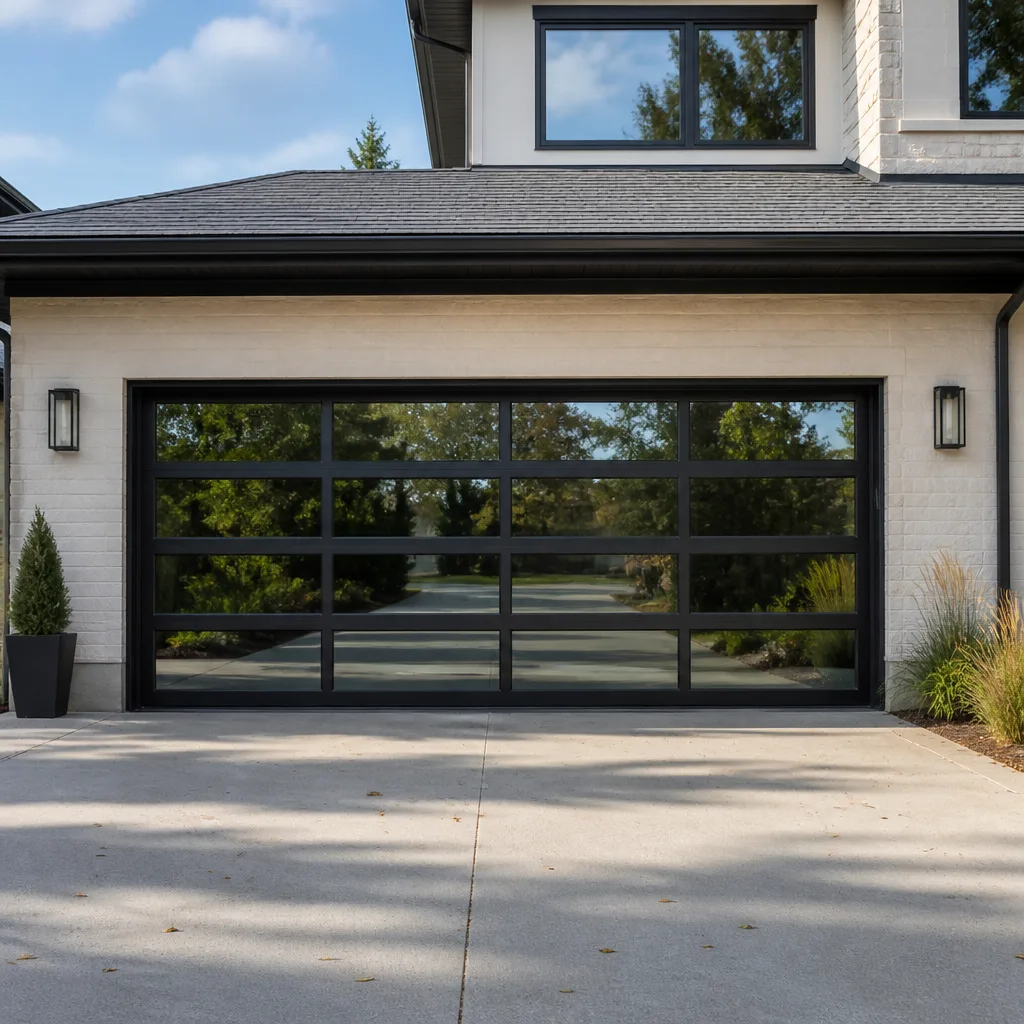 Full-view glass
 LiftMaster openers
 Chamberlain openers
Full 25-point door and opener safety check with every visit - springs, cables, rollers, tracks, and your LiftMaster or Chamberlain opener included
You get a price before we start. It does not change when the pro arrives.
Get your free estimateSeasonal Garage Door Care for Lawrenceville: Year-Round Homeowner’s Guide
Most homeowners treat garage door care as one task on one Saturday in spring: spray some lubricant, tug on the door, call it done. That approach misses how a door actually ages in western Pennsylvania. A Lawrenceville garage door lives through four very different mechanical environments each year – a humid summer that swells wood and heats steel, a fall that swings forty degrees in a day, a winter that drives frost deep into the concrete under the threshold, and a spring thaw that pushes all that moisture back up into your bottom panel. The work you do in October decides whether your door makes it through February without a snapped spring or a rotting bottom section. This guide maps every task to the month it belongs in, using Lawrenceville’s real weather patterns instead of generic advice.
Quick Answer
Seasonal garage door care in Lawrenceville means four distinct maintenance windows, not one: fall prep in September and October (lubrication and weather seal), winter monitoring from December through February (cold-contracted springs and threshold ice), spring inspection in March and April (freeze-thaw hardware wear and moisture damage), and summer calibration in July and August (heat-driven spring tension drift). Do the right task in the right month and you cut the two biggest failure windows – mid-January spring snaps and late-March bottom-seal rot – down to near zero.
Styles & brands we work with
- Raised-panel steel
- Carriage house
- Modern flush
- Full-view glass
- LiftMaster openers
- Chamberlain openers
Table of Contents
- Why a Lawrenceville Garage Door Has Four Failure Windows, Not One
- Fall Prep: Why October Lubrication Matters More Than Any Other Month
- Winter Failure Modes Unique to Western PA
- Spring Inspection: Hardware That Shows Freeze-Thaw Wear First
- Summer Heat and Torsion Spring Tension Drift
- The Month-by-Month Lawrenceville Task Calendar
- What You Can Safely Do Yourself (and What You Can’t)
- Brand-Specific Care Notes: Chamberlain, Genie, Clopay, Amarr
Why a Lawrenceville Garage Door Has Four Failure Windows, Not One
A garage door is a balance of forces held in tension: torsion or extension springs pull up, gravity pulls down, and the opener just tips the balance. Every part of that system responds to temperature. Steel expands in July heat and contracts in January cold. Lubricant thickens below freezing. Wood panels swell in humid air and shrink when the heat comes on. Concrete under the threshold heaves and settles with the frost line.
Lawrenceville sits in a climate with genuine seasonal swings – hot, humid summers and cold winters with repeated freeze-thaw cycles. That’s not a mild climate where a door can go years without attention. It’s a climate that stresses every moving part twice a year in opposite directions.
Here’s what that means in practice. The calls we field in Lawrenceville come in two predictable waves:
- Mid-January: cold-contracted springs snap. A spring that was already near the end of its cycle life fails fast when the steel contracts and tension spikes.
- Late March: freeze-thaw cycles have let moisture work under the bottom seal all winter, and the bottom section of the door has started to rot from the outside in.
Neither is random. Both are the direct result of what did or didn’t happen in the months before. A door that got proper fall lubrication and a weather-seal check in October arrives in January with a spring that isn’t fighting a dry, gritty torsion tube. A door with a sealed threshold in November doesn’t feed meltwater into its bottom panel in February.
The rest of this guide breaks the year into those four windows and gives you the specific tasks for each. If you’d rather have a specialist handle the whole cycle, our Lawrenceville Garage Door Repair Pros page covers what a full-service visit includes.
Fall Prep: Why October Lubrication Matters More Than Any Other Month
October is the single most important month in the Lawrenceville garage door calendar, and the reason is lubricant viscosity. Most garage door lubricant is a light spray or a gel that’s designed to flow at room temperature. When the temperature drops below about 10°F, cheap or thin lubricant stops flowing and starts acting like glue. It thickens on the rollers, the hinges, and the torsion tube, and suddenly the opener is fighting a door that’s dragging against its own grease.
What to use before the cold sets in
The right product for a Lawrenceville fall is a lithium- or silicone-based garage door lubricant rated to stay fluid at low temperatures – the kind sold specifically for garage door hardware, not general-purpose WD-40 or motor oil. A few specifics:
- Lithium grease or a low-temp silicone spray on hinges, rollers, and the torsion tube. Look for a product that says it stays fluid below freezing.
- Avoid anything that gets gummy. Heavy axle grease and general household oils thicken in the cold and turn into drag.
- Never lubricate the tracks. Tracks should be clean and dry. Grease in the tracks collects grit and causes the door to bind.
- Wipe down the weather seal and apply a silicone protectant so the rubber doesn’t crack when it freezes.
The fall checklist, in order
- Lubricate hinges, rollers, and the torsion tube with a low-temp product. One pass, then wipe the excess.
- Inspect the bottom weather seal for cracks, gaps, or a flattening edge. This is the seal that keeps winter meltwater out of your bottom panel.
- Check the threshold for cracks where water can pool and freeze.
- Test the door balance by disconnecting the opener and lifting the door halfway. It should hold position. If it drifts down, the springs are weak and cold weather will make it worse.
- Test the safety reverse – the auto-reverse should trip when the door meets an obstruction.
- Check the opener’s force settings – a door that’s starting to bind tells the opener to push harder, and that’s a sign of something to fix before winter.
If the balance test fails, or if the door makes a grinding or popping noise when it moves, that’s the moment to call. A weak spring in October is a snapped spring in January. Our garage door repair team can check balance and spring condition before the cold locks in.
Winter Failure Modes Unique to Western PA
Winter doesn’t just make a garage door cold – it changes how the door behaves. Two failure modes dominate in Lawrenceville between December and February, and they’re both preventable.
Cold-contracted springs
Torsion and extension springs are steel under constant load. Cold contracts the steel, which raises the effective tension on a spring that’s already near its limit. A spring with thousands of cycles on it can be fine all summer and snap on the first sub-zero morning. Extension springs are especially prone to this because they stretch rather than twist, and a cold-stiff spring stretches unevenly.
You can’t inspect a spring’s remaining life by looking at it, and this is where we’re blunt: do not touch a torsion spring, and don’t try to adjust one. The torsion spring stores enough energy to cause serious injury if it releases unexpectedly. If you hear a loud bang from the garage, see a gap in the spring coil, or the door won’t lift, stop and call a trained technician.
Ice dams at the threshold
Western PA winters bring repeated snow-melt-refreeze cycles. Water runs off the car, off the roof, and off the driveway, pools at the bottom of the garage door, and freezes. The ice expands and pushes against the bottom seal, and over weeks of freeze-thaw the seal cracks. Once the seal is compromised, meltwater gets behind it and into the bottom section of the door, where it rots from the outside in.
The fix is not to chip the ice away. It’s to keep the water out in the first place:
- Shovel or sweep snow away from the door face so meltwater has somewhere to go.
- Keep the threshold clear of standing water – a squeegee or a quick sweep after a thaw helps.
- Never pour hot water on the threshold to clear ice – it refreezes and stresses the seal.
- Check the seal after every thaw for cracks or separation.
If the seal is already torn or the bottom panel is soft to the touch, that’s a replacement job, not a repair. Our garage door repair team handles bottom-seal replacement before the next freeze.
Spring Inspection: Hardware That Shows Freeze-Thaw Wear First
By the time March arrives in Lawrenceville, your door has been through months of cold, moisture, and temperature cycling. Spring inspection is about finding what the freeze-thaw season wore out before it fails in the middle of summer.
The hardware that moves most during temperature cycling
Not every part wears at the same rate. These are the parts that show freeze-thaw damage first, in roughly the order we see them:
- Bottom weather seal: the most exposed part of the door. Cracked, flattened, or separated seals are the number one spring finding.
- Hinges and rollers: the pivot points. Cold makes the lubricant stiff, and every cycle works the hinge pins and roller stems harder than in warm weather.
- Cables: steel cables under tension. Fraying, kinks, and rust spots are common by March.
- Bottom brackets and the bottom panel itself: where moisture collects. Soft wood or bubbling paint on the bottom section is a sign of rot.
- Torsion spring ends: look for rust and a slight gap at the coil. Both are signs the spring is losing tension.
The spring inspection, step by step
- Look at the bottom seal all along its length for cracks, gaps, or a flat profile.
- Run the door up and down and listen for grinding or popping – that points to hinges or rollers.
- Check the cables for fraying or kinks near the bottom brackets.
- Look at the bottom panel for soft spots, bubbling paint, or discoloration.
- Test the balance with the opener disconnected – if it doesn’t hold position, the springs need attention.
- Test the safety reverse and the photo-eye alignment.
If the door is out of balance or the cables look worn, that’s a specialist job. Cables and springs are the two highest-risk components on any garage door, and they’re exactly what our spring expertise covers. Call (866) 984-8670 for a free estimate before the door fails in July.
Summer Heat and Torsion Spring Tension Drift
Heat does the opposite of cold: it expands steel and relaxes tension. A torsion spring that was balanced in March can be noticeably out of calibration by July, and the symptom is subtle until it isn’t. The door feels a little heavier, the opener works a little harder, and the door may start to drift down a few inches after it opens.
Why a March balance may not hold in July
Torsion spring tension is set in a specific number of turns on the torsion tube. That setting is calibrated for the door’s weight at a given temperature. When the steel warms and expands, the spring’s effective pull changes, and the door’s balance shifts. It’s a small drift, but a door that was perfectly balanced in March can be out by a noticeable margin by August.
Add humidity to the picture. Wood-panel doors swell in summer humidity, which changes the door’s weight and balance again. A Clopay or Amarr wood-look steel door is less affected than a true wood door, but any door gains a little weight in a humid Lawrenceville July.
What to watch for in July and August
- The door feels heavier when you lift it manually (opener disconnected).
- The opener strains or sounds louder than it did in spring.
- The door drifts down after opening, or doesn’t stay fully open.
- The safety reverse trips on its own, or the door reverses before it fully closes.
Any of those means the door needs a balance check and possibly a tension adjustment. Tension adjustment is not a homeowner job – the spring is under load, and the adjustment requires the right tools and knowledge. Our garage door repair team handles spring tension calibration, and our garage door opener repair team can check whether a straining opener is a force-setting issue or a symptom of a door that’s out of balance.
The Month-by-Month Lawrenceville Task Calendar
Here’s the whole year, mapped to Lawrenceville’s actual seasonal pattern. The temperature and moisture notes are general guidance, and the tasks are the ones that matter most in each window.
- January: Coldest month, sub-freezing stretches. Watch for spring snaps and ice at the threshold. Keep snow cleared from the door face. Do not adjust springs yourself.
- February: Cold with freeze-thaw cycles. Check the bottom seal after every thaw. Watch for bottom-panel softness.
- March: First warm-up, lots of meltwater. Full spring inspection: bottom seal, cables, hinges, balance test. This is the month freeze-thaw damage shows up.
- April: Wet spring. Check for water pooling at the threshold. Inspect the bottom panel for rot. Lubricate hinges and rollers as the weather warms.
- May: Mild and humid. Test the opener’s force settings and safety reverse. Clean the tracks.
- June: Warm and humid. Watch for wood swelling and door weight gain. Balance check if the door feels heavy.
- July: Hottest month. Spring tension drift is most likely. Check door balance, opener strain, and drift after opening.
- August: Continued heat and humidity. Re-check balance. Listen for opener strain.
- September: Cooling begins. Start fall prep: clean and lubricate hinges, rollers, and the torsion tube with a low-temp product.
- October: The most important lubricant month. Apply low-temp lubricant, inspect and protect the bottom seal, check the threshold. Test balance before winter.
- November: Cold arrives. Final seal and threshold check before the first freeze. Clear gutters and downspouts so meltwater doesn’t run toward the door.
- December: Winter begins. Watch for ice at the threshold. Keep the door face clear of snow.
The October and March tasks are the highest-value ones in this calendar. Everything else is maintenance; those two months are prevention.
What You Can Safely Do Yourself (and What You Can’t)
There’s a clear line between what a homeowner can safely handle and what needs a trained technician. Respecting that line is most of what seasonal care means.
Safe for a homeowner
- Lubricating hinges, rollers, and the torsion tube with a low-temp garage door lubricant.
- Cleaning the tracks with a damp cloth (no grease).
- Inspecting the bottom seal for cracks, and applying a silicone protectant.
- Testing the safety reverse and photo-eye alignment.
- Testing the balance with the opener disconnected.
- Clearing snow and ice from the door face and threshold.
- Replacing opener batteries, and checking that the opener is plugged in and the circuit is live.
Needs a trained technician
- Torsion spring replacement or adjustment: the spring stores enough energy to cause serious injury. This is the most dangerous and most commonly botched DIY repair on a garage door, and it is not a homeowner job.
- Cable replacement: cables are under tension and can recoil.
- Bottom bracket and panel replacement: structural, and a wrong install can cause the door to bind.
- Opener force-setting and limit-switch calibration: wrong settings cause the safety reverse to fail or the door to jam.
- Roller and hinge replacement on a door under tension.
If a spring is snapped, a cable is frayed, or the door is off its tracks, stop operating the door and call. We answer 24/7. Fast dispatch from 7am to 7pm, Sunday through Friday. For the full range of what we handle, see our garage door repair page.
Brand-Specific Care Notes: Chamberlain, Genie, Clopay, Amarr
Seasonal care looks a little different depending on what’s on your house. We work on Chamberlain, Genie, Clopay, Amarr, LiftMaster, Wayne Dalton, Craftsman, and Raynor equipment, and the brand matters for parts and calibration.
Chamberlain and Genie openers have their own force and limit settings, and the calibration procedure isn’t the same between them. A Chamberlain opener that strains in July may need a force adjustment, not a new unit. A Genie that won’t stay closed is often a limit-switch issue. Either way, the fix is brand-specific, and generic opener advice doesn’t apply cleanly.
Clopay and Amarr doors are common on Lawrenceville homes, and both have specific weather-seal profiles and bottom-bracket designs. When a bottom seal fails, the right replacement is the one made for that door, not a universal strip. That’s why we source parts across the eight brands we support – the right part for your specific system, not a universal substitute.
If your door is ready for a full replacement, seasonal care is also the moment to think about a new door. Our garage door installation team can spec a new door that fits the way your garage actually behaves in a Lawrenceville winter – proper insulation, a seal that handles freeze-thaw, and an opener calibrated to the door. Stop by our main page for the full scope of services.
Common Mistakes to Avoid
- Using general-purpose oil or WD-40 as garage door lubricant. It thickens below freezing and turns the door into a drag. Use a low-temp garage door lubricant in October.
- Greasing the tracks. Tracks should be clean and dry. Grease collects grit, and a gritty track binds the door and strains the opener.
- Trying to adjust or replace a torsion spring. This is the highest-risk repair in the trade and the one most often done wrong. A snapped spring is a specialist job, full stop.
- Ignoring the bottom seal until March. By the time the damage shows, the bottom panel may be rotting. Check the seal in October and after every winter thaw.
- Assuming a March balance holds all year. Heat expands steel and changes tension. A door balanced in March can be out of calibration by July. Check balance again in summer.
- Chipping ice off the threshold with a shovel or an ice pick. It cracks the seal and gouges the bottom panel. Clear snow, keep the threshold drained, and never pour hot water on it.
- Ignoring a straining opener. A louder, slower opener in July is often a symptom of a door out of balance, not a failing opener. Fixing the door is cheaper than replacing the opener.
See the difference
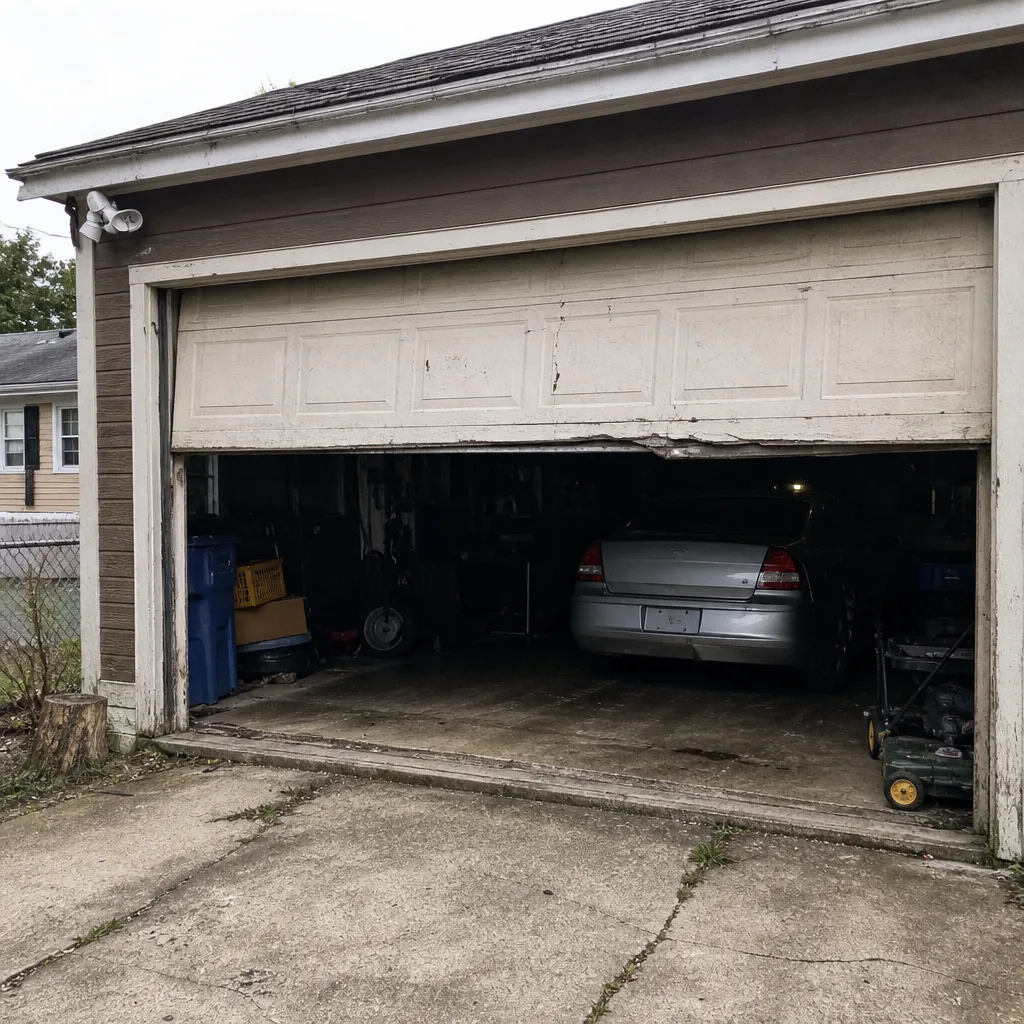 Before
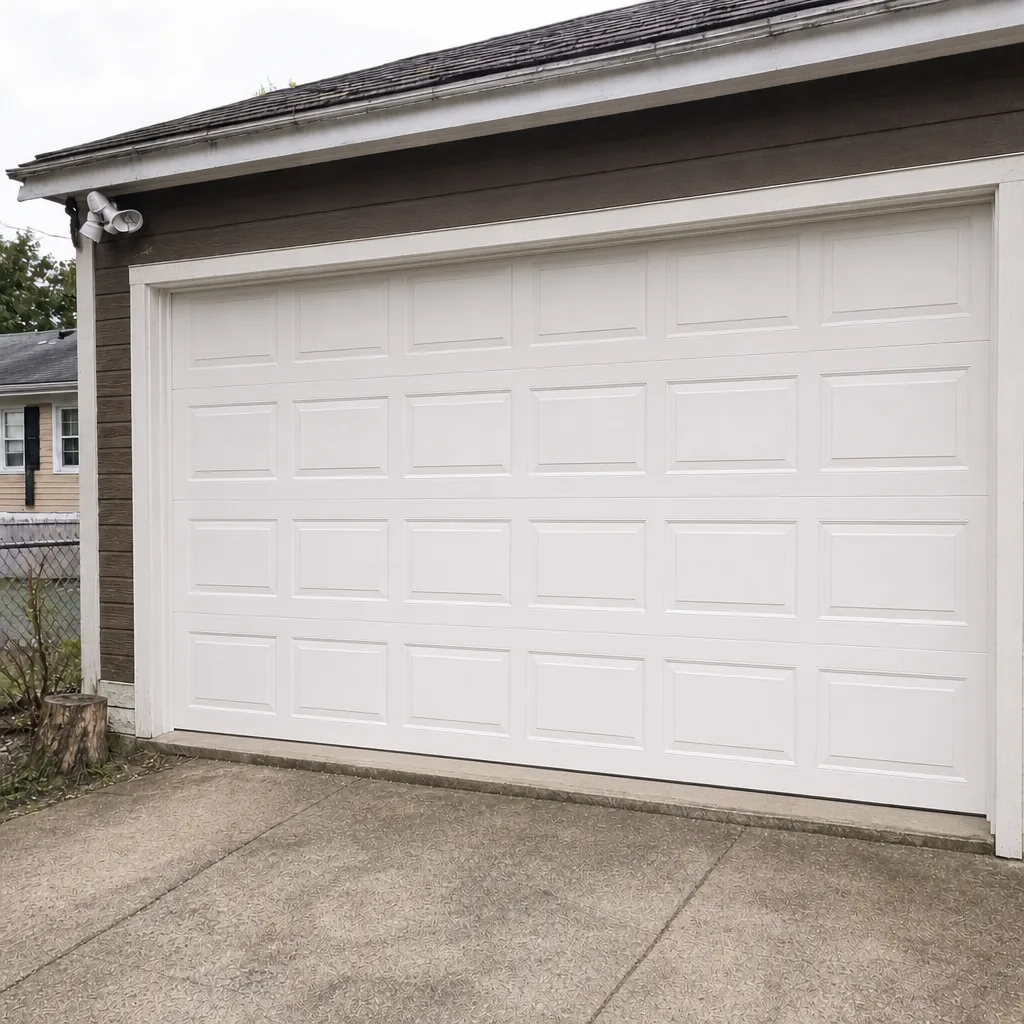 After
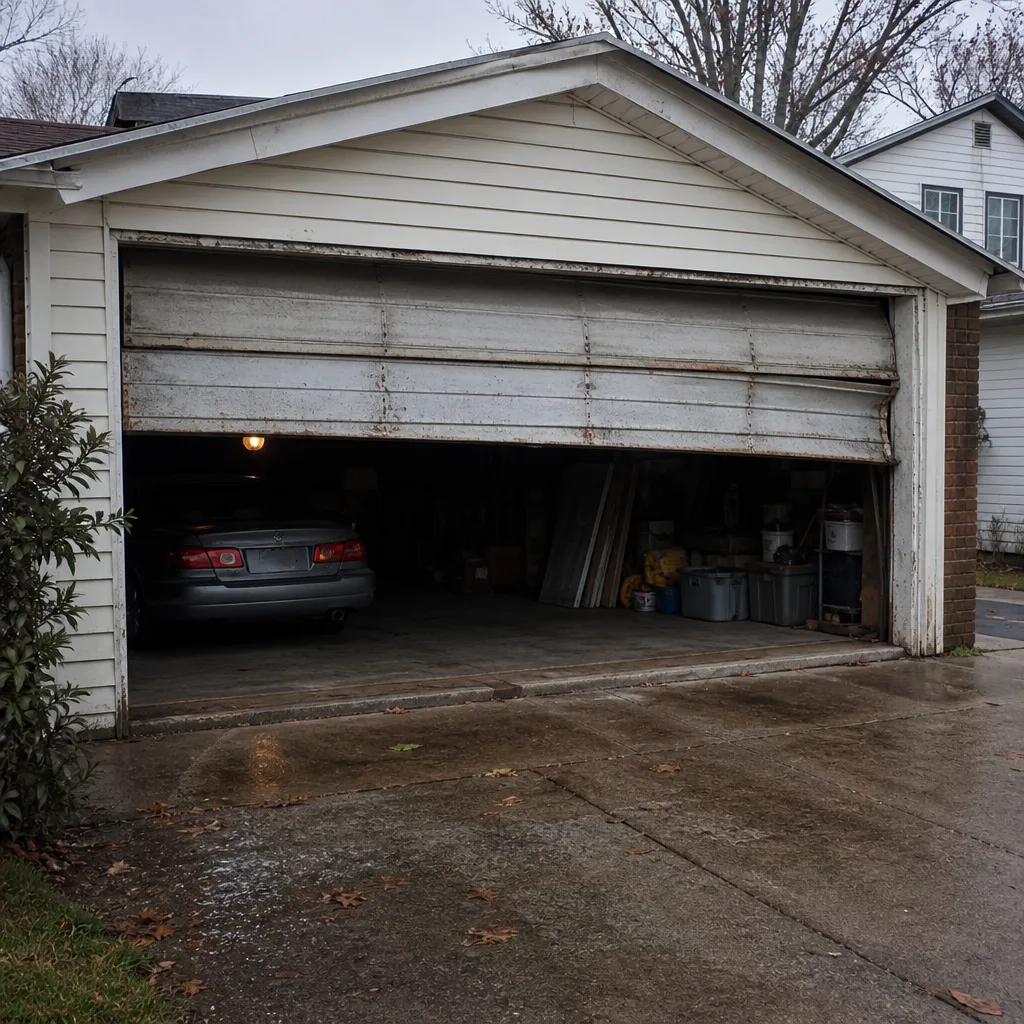 Before
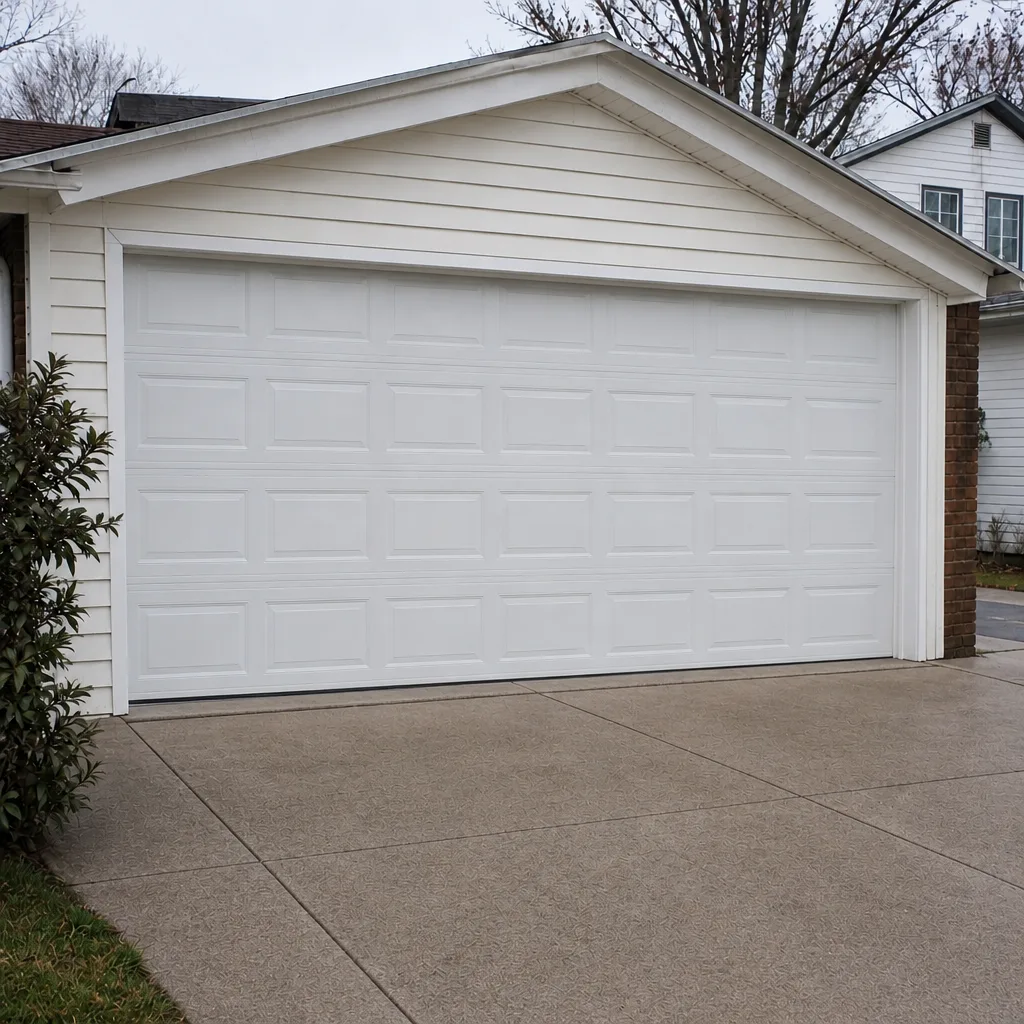 After
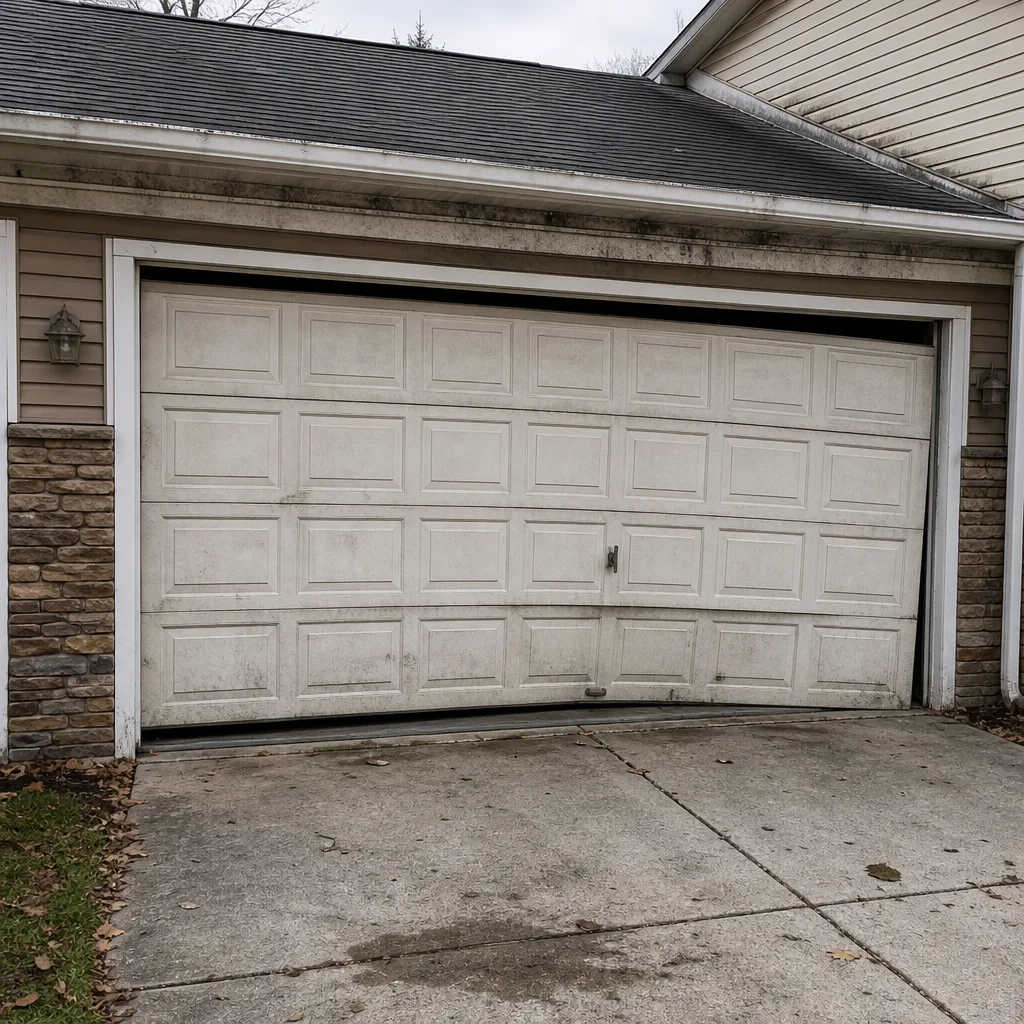 Before
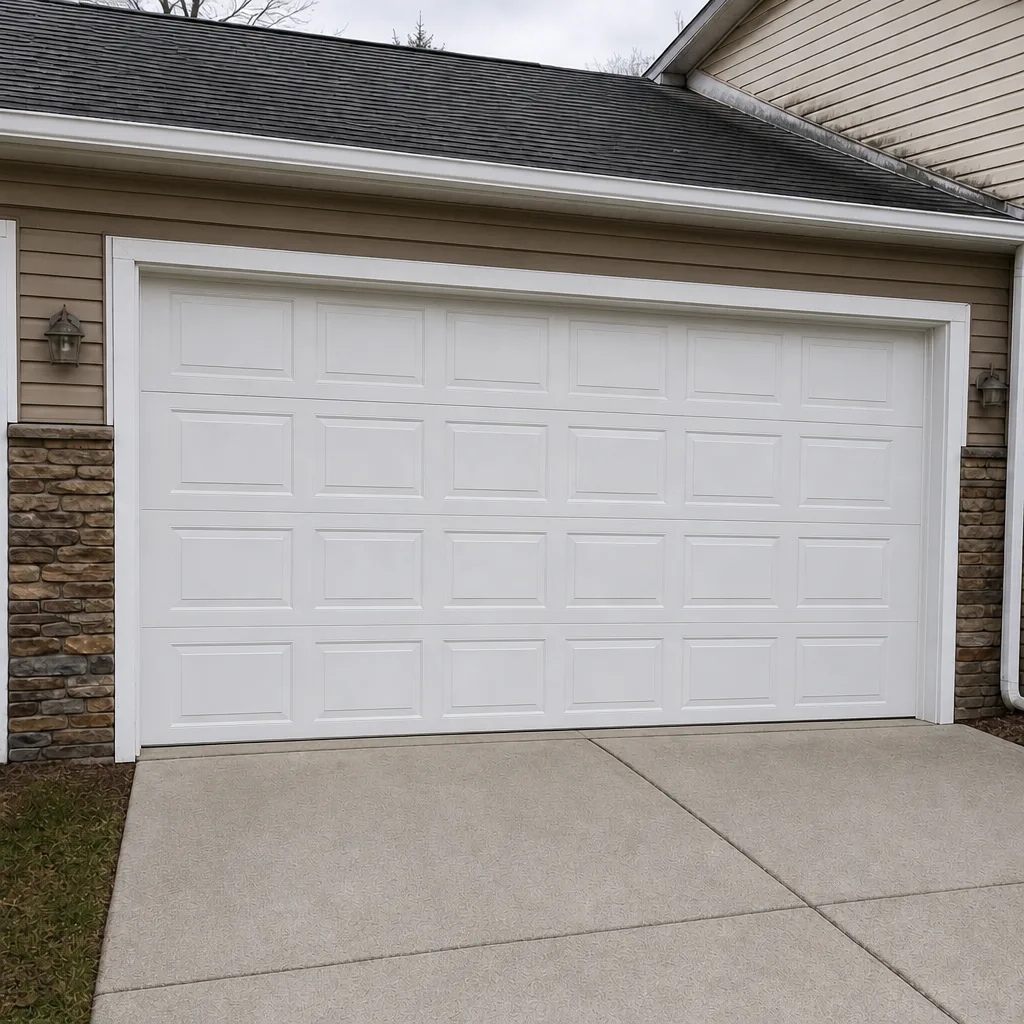 After
When to Call a Professional
Call a specialist the moment any of these come up, and don’t wait for a “convenient” month: a snapped spring, a door that won’t lift, a door off its tracks, a frayed or kinked cable, a bottom panel that’s soft or rotting, an opener that reverses for no reason, or any door that’s out of balance after a spring inspection. These are the jobs where a homeowner attempting a fix can turn a repair into a replacement – or worse. Our technicians have up to 10 years of experience, and we’re a single-trade specialist: every call, every technician, and every tool is specific to garage doors. Lawrenceville Garage Door Repair Pros offers free estimates in Lawrenceville – call (866) 984-8670. We answer 24/7. Fast dispatch from 7am to 7pm.
Frequently Asked Questions
At least twice a year in this climate – once in October for fall prep (lubrication, weather seal, balance test) and once in March for spring inspection (seal, cables, hinges, balance). The two visits cover the four failure windows that western PA weather creates. If your door is older or you’ve had a spring or cable issue before, a mid-summer balance check between the two is a smart third touch.
Cold contracts steel, which raises the effective tension on a spring that’s already near the end of its cycle life. A spring that’s fine all summer can fail on the first sub-zero morning. The fix is fall prep: a door with clean, low-temp lubricant on the torsion tube and a balance test in October arrives in January under less strain. If a spring does snap, call (866) 984-8670 – it’s a specialist job and never a DIY one.
You can safely lubricate hinges, rollers, and the torsion tube yourself with a low-temp garage door lubricant – that’s the one maintenance task we’d hand to a homeowner. What you shouldn’t do is adjust springs, replace cables, or change a bottom bracket. Those are under tension and can cause serious injury. If lubrication doesn’t fix a noisy or binding door, the cause is usually balance or a worn hinge, and that’s a call.
There’s no single price because it depends on what the inspection finds – a lubrication and adjustment visit is one thing, a spring or seal replacement is another. The written estimate you get before any work starts sets the price, so there’s no surprise invoice later. Call (866) 984-8670 for a free estimate, and we’ll tell you what your door actually needs by month.
It can be – heat expands the steel and changes torsion spring tension, so a door balanced in March can be out of calibration by summer. Humidity adds weight to wood panels too. If the door feels heavier, drifts down after opening, or the opener strains, that’s a balance issue and it’s worth a check before the opener wears out. A straining opener in July is often a door problem, not an opener problem.
Clear snow away from the door face so meltwater can drain, keep the threshold clear, and never pour hot water on it or chip it with a shovel – both damage the seal. Check the bottom seal after every thaw for cracks or separation. If the seal is torn or the bottom panel is soft, that’s a replacement before the next freeze. Call (866) 984-8670 and we’ll take a look.
The Bottom Line
Seasonal garage door care in Lawrenceville isn’t a spring chore – it’s a four-window calendar, and the October and March windows carry most of the weight. October prep (low-temp lubrication, weather-seal check, balance test) is what gets a door through the January spring-snap season. March inspection is what catches the freeze-thaw damage that winter left behind before it becomes a rotting bottom panel. July and August are when you re-check balance, because heat changes torsion spring tension and a door balanced in March can drift by summer. Do those four windows and you’re ahead of most of the doors we see. When a task is outside the safe homeowner line – springs, cables, brackets – that’s a specialist call, not a weekend project. For anything on your door, call (866) 984-8670 for a free estimate.
Written by the team at Lawrenceville Garage Door Repair Pros.