
Last updated November 21, 2026
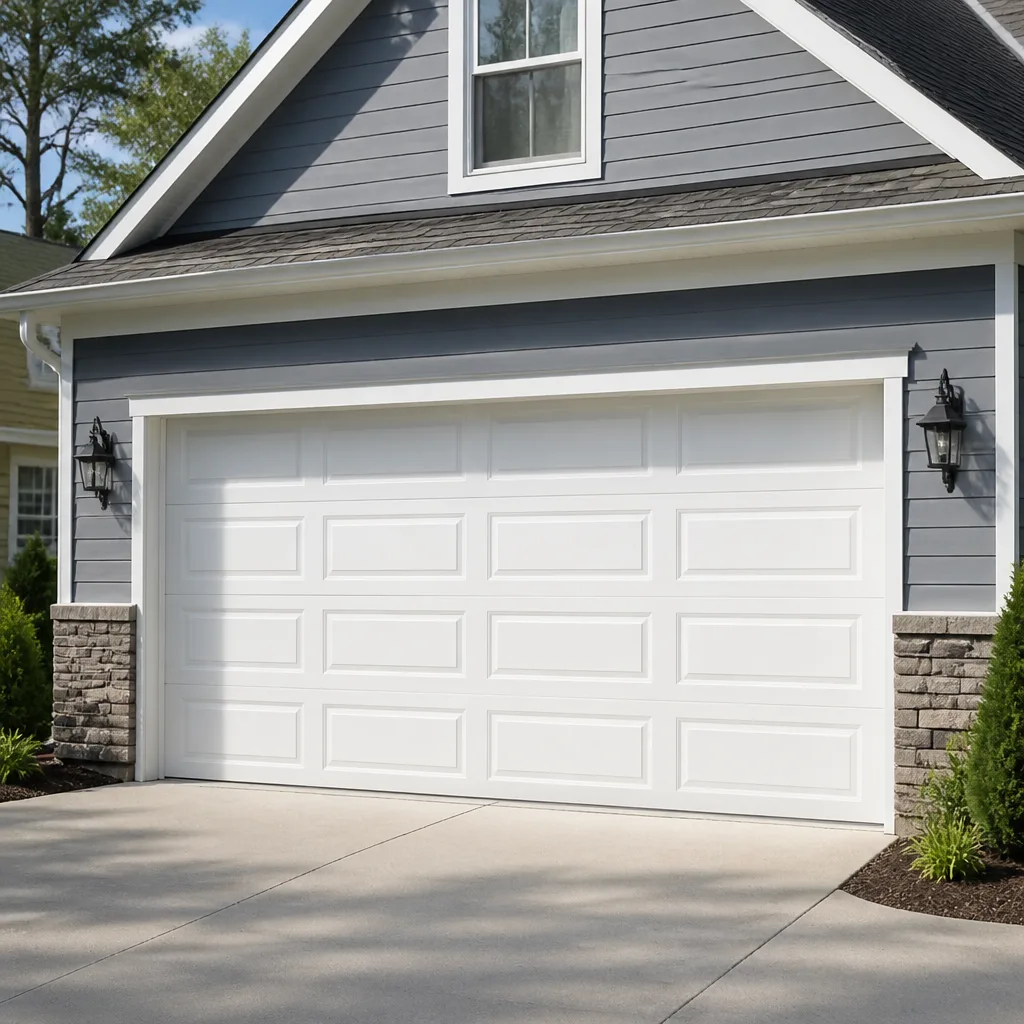 Raised-panel steel
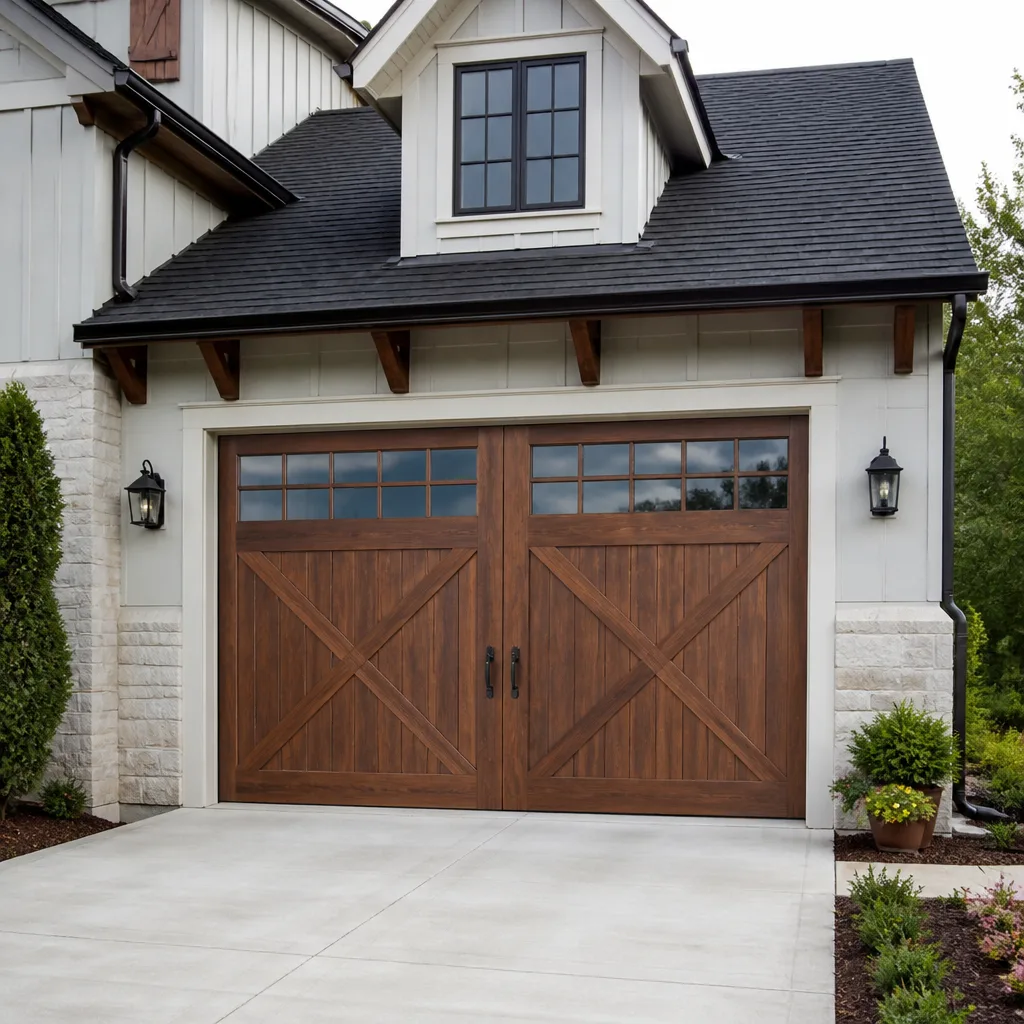 Carriage house
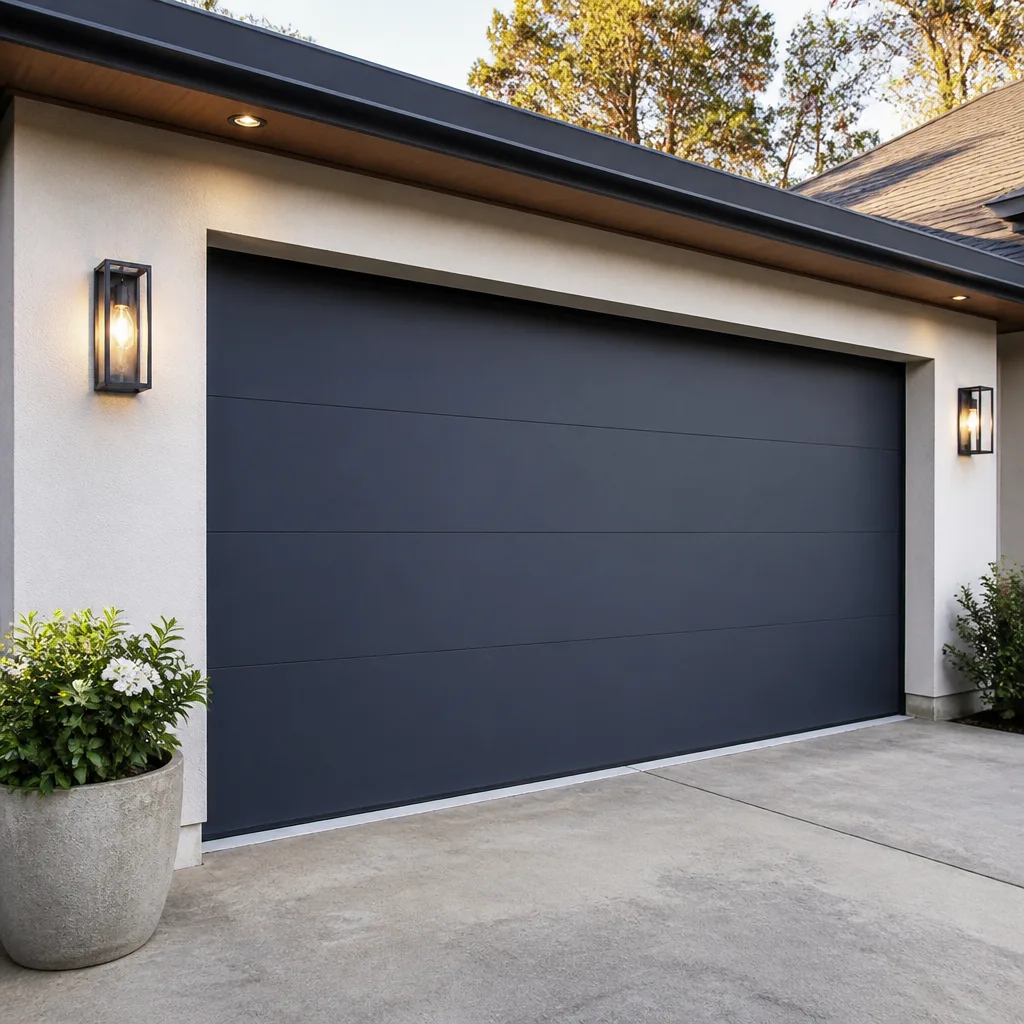 Modern flush
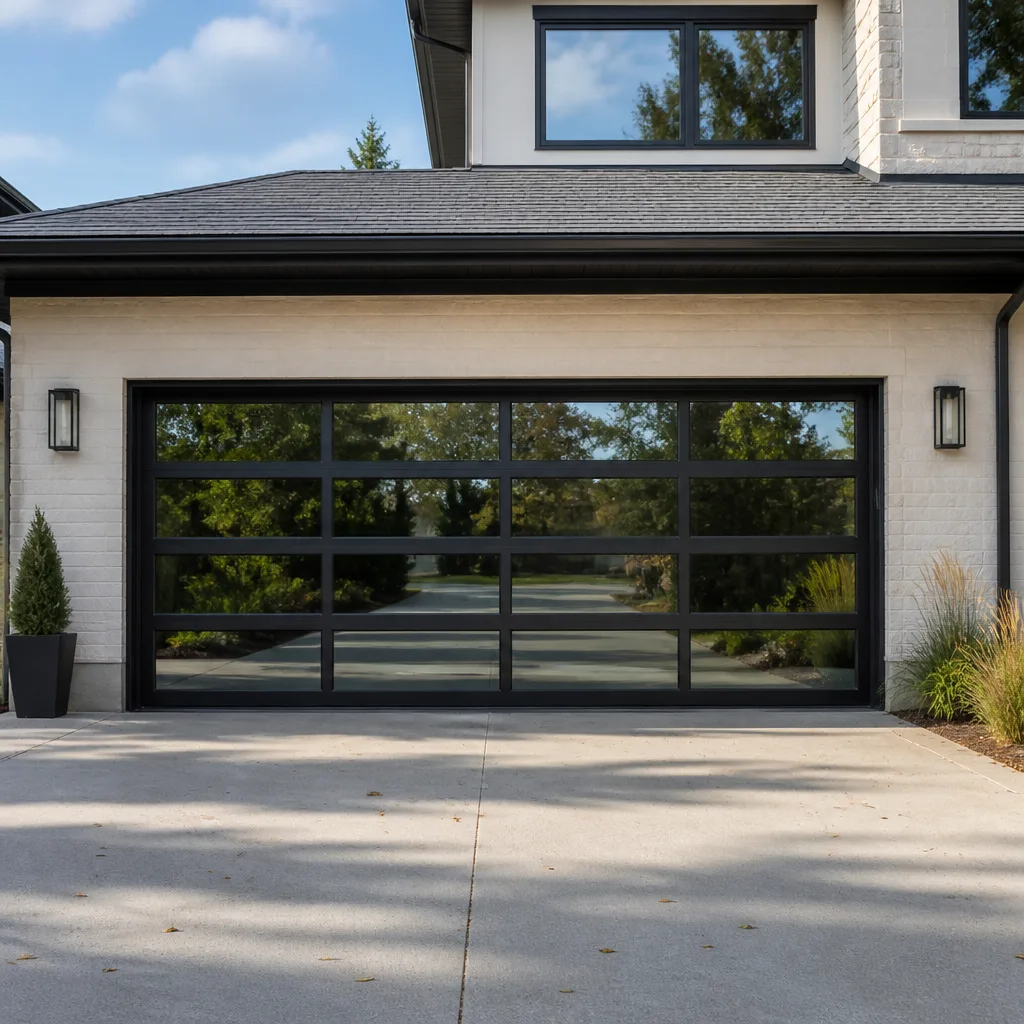 Full-view glass
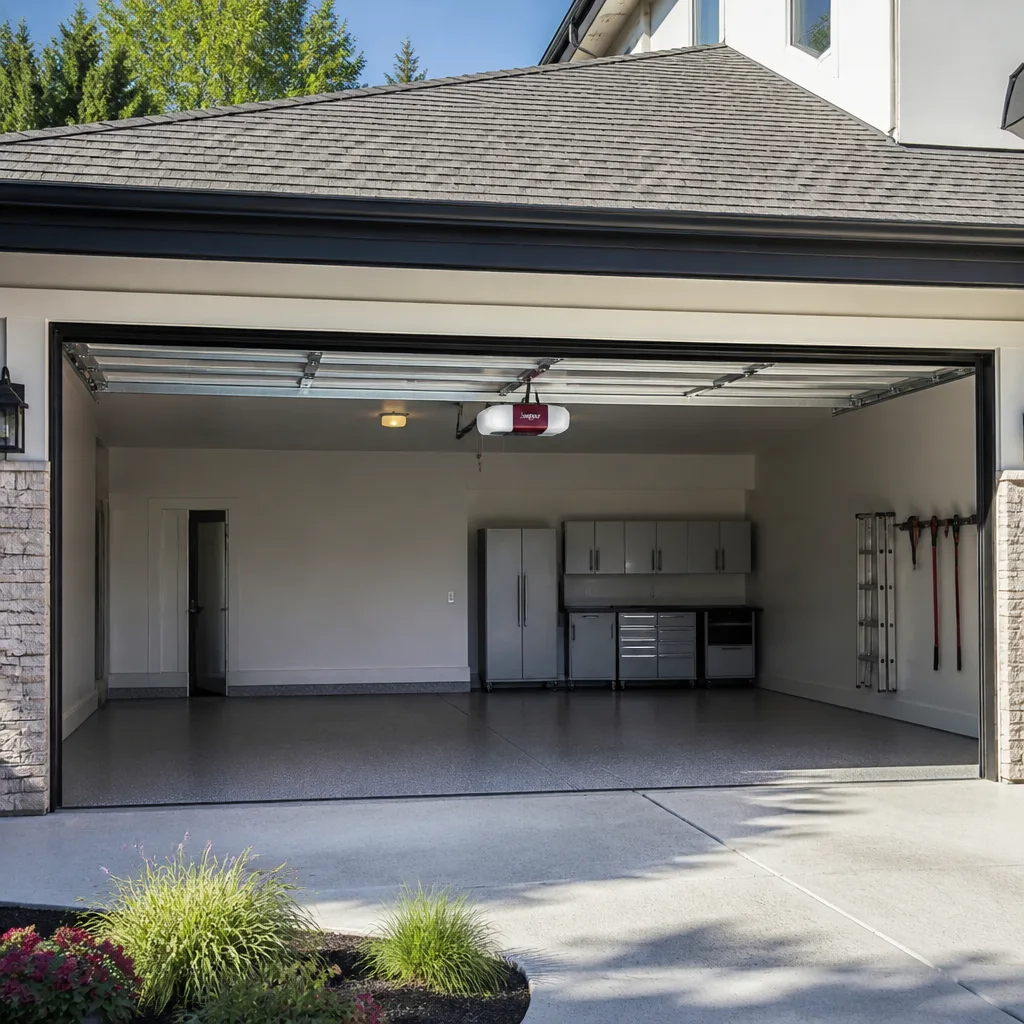 LiftMaster openers
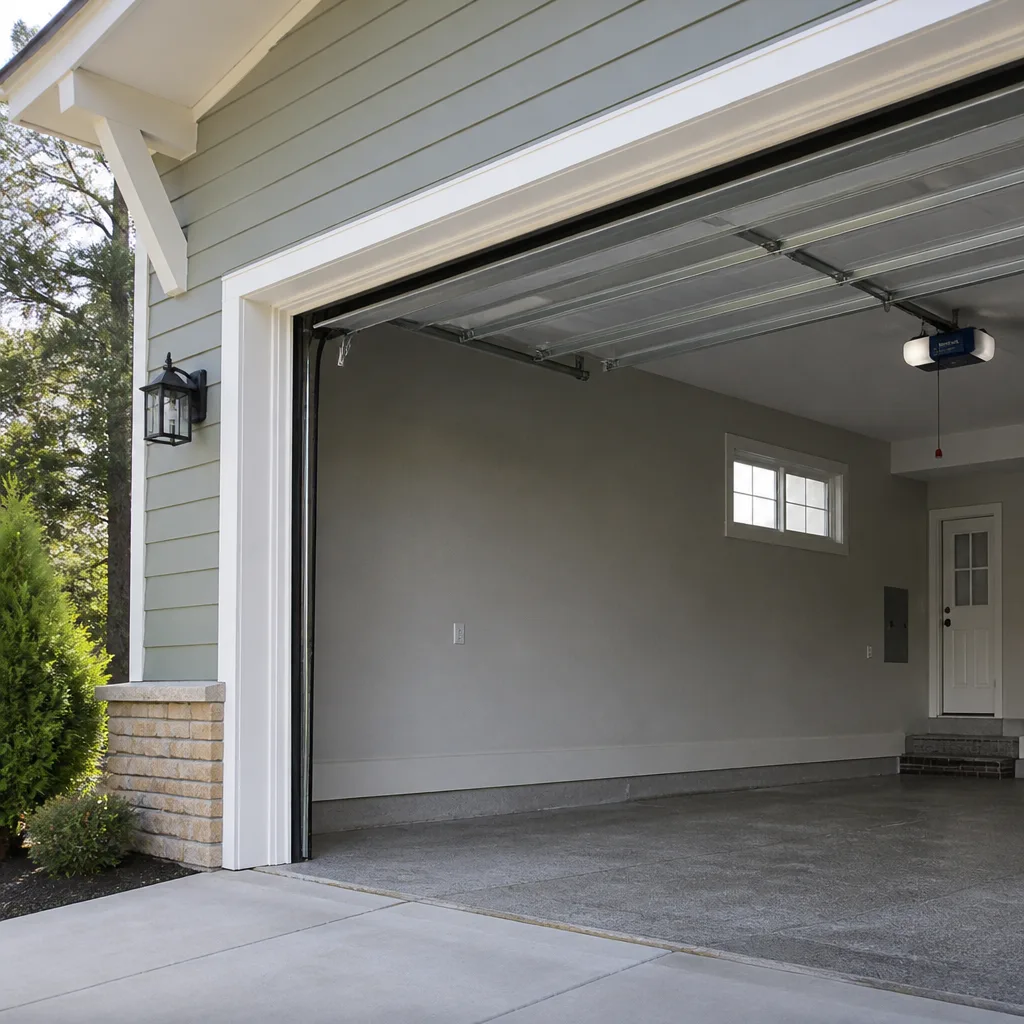 Chamberlain openers
Full 25-point door and opener safety check with every visit - springs, cables, rollers, tracks, and your LiftMaster or Chamberlain opener included
You get a price before we start. It does not change when the pro arrives.
Get your free estimateDIY vs Professional Garage Door: The Lawrenceville Homeowner’s Decision Guide
A torsion spring stores enough energy to break a hand in less than a second of contact. That’s not a liability disclaimer. It’s physics. And yet a bottom seal, a roller, a keypad, an opener remote – those are honest owner-level jobs that a careful homeowner can finish in an afternoon. The mistake most guides make is treating garage door work as either all DIY or all professional, when it’s clearly neither. What you actually need is a clean line drawn task by task, with the reasoning behind each call. That’s what this guide does for Lawrenceville homeowners, and it’s the same line we walk when a customer asks us whether they should just do it themselves.
Quick Answer
Safe DIY garage door tasks are the ones that touch no spring, no cable, and no torsion hardware: bottom seals, rollers, hinges, keypads, remotes, photo-eye alignment, and tightening exposed bolts. Spring, cable, drum, and track work belongs with a trained technician because a single slip can cause permanent injury, and because a mismatched spring quietly destroys the rest of the system. Everything in between – opener boards, panel replacement, full installation – depends on your door’s current condition, which is why the assessment comes before the project.
Styles & brands we work with
- Raised-panel steel
- Carriage house
- Modern flush
- Full-view glass
- LiftMaster openers
- Chamberlain openers
Table of Contents
- Where the DIY line actually falls
- The tasks a homeowner can genuinely handle
- The tasks that always call for a professional
- The hidden cost of a DIY mistake
- How to assess your door before you decide
- Tools, hardware, and what door kits are worth buying
- What’s different about garage doors in Lawrenceville
- Openers: where DIY gets murky
Where the DIY line actually falls
The dividing line in garage door work isn’t skill. It’s consequence. Plenty of homeowners are more mechanically capable than they give themselves credit for, and a few are less capable than they believe. Skill level doesn’t change the physics of a wound torsion spring, and it doesn’t change what happens when a cable lets go under load. So the useful question isn’t “can I do this?” It’s “if this goes wrong in the worst half-second, what’s the outcome?”
That reframing sorts every garage door job into three buckets:
- Owner-level work. No stored energy involved beyond a balanced door. A mistake costs you time or a cheap part, not a finger.
- Conditional work. Safe only if the door is already balanced and sound, and only with the right parts. Roller replacement, hinge replacement, opener logic boards, and photo-eye work sit here.
- Professional-only work. Springs, cables, drums, and torsion hardware. Also bent track on a loaded door, and any situation where the door has partially failed already.
In Lawrenceville, we see plenty of doors that are a decade or more into service on what looks like an ordinary residential street. Age matters less than condition. A 20-year-old door that’s been lubricated and balanced can be safer to work on than a 5-year-old door with a frayed cable that nobody has looked at. The condition check in the section below is the part most homeowners skip.
The tasks a homeowner can genuinely handle
These are the jobs we tell Lawrenceville homeowners they can take on without hesitation, provided the door is balanced and the springs are intact. They cost little, they don’t touch stored energy, and a mistake is recoverable.
- Bottom seal replacement. The rubber astragal at the floor takes the most wear of any part on the door. It slides out of its retainer and the new one slides in. Measure the width and the retainer profile before you order.
- Roller replacement. With the door fully open and the springs under tension but undisturbed, rollers slide out of their hinges. Replace nylon rollers when they’re flat-spotted or noisy. Never remove a hinge or roller with the door partially open or under load.
- Hinge replacement. Same principle. Door fully open, one hinge at a time, matching the gauge and the number stamped on the old hinge.
- Keypad and remote programming. Pure electronics and pairing. Your manual or the manufacturer’s programming sequence covers it, and it’s the fastest win on this list.
- Photo-eye alignment. If the door reverses on the way down, the safety sensors are usually misaligned or blocked. A level check and a small bracket adjustment solves most of these.
- Lubrication and bolt tightening. A garage door has a lot of fasteners, and vibration loosens them over time. A socket set and a can of proper garage door lubricant (not WD-40) go a long way.
- Weatherstripping around the frame. The perimeter seal on the jambs and header. Cosmetic and thermal, not structural.
One caution on this whole list: any of it becomes professional work the moment the door is unbalanced, a cable looks frayed, or a spring looks stretched or gapped. Those are stop signs, not speed bumps. If you spot them mid-project, stop and call.
The tasks that always call for a professional
These are the jobs where the cost-benefit math flips decisively, no matter how handy you are:
- Torsion spring replacement. The single most dangerous task in the category. A torsion spring on a standard double door holds enough stored energy to cause permanent hand or arm injuries in under a second. Winding it requires two proper winding bars, a controlled sequence, and the knowledge to stop. There is no safe workaround and no shortcut that makes this an owner job. Our team treats garage door repair as a specialty precisely because spring work is the highest-risk component in the system, and it’s where we see the most botched attempts.
- Extension spring replacement. Lower tension than torsion, but still stored energy, still a loaded system, and still a job for someone who does it regularly with the right hardware.
- Cable replacement. Cables are under continuous tension and are what actually hold the door’s weight on a torsion system. A cable that snaps while you’re near it is a genuine hazard. Never cut or loosen a cable to “see what happens.”
- Drum replacement. Drums are the spooling hardware the cables wind onto. Getting the cable seated and wrapped correctly is a calibration task, not a swap.
- Track straightening on a loaded door. A bent track usually means something else is wrong – worn rollers, a spring imbalance, or an impact. Straightening the symptom without finding the cause just delays the failure.
- Any door that’s already partially failed. A door hanging on one side, a door that won’t close flush, a door that slams – these are not practice projects. They’re diagnostic jobs.
- Full panel or door replacement. Panel weight, hinge alignment, and spring recalibration all change together. This is a measuring-and-ordering job, which is garage door installation territory, not a weekend swap.
The pattern is straightforward: anything involving stored energy, cable tension, or the door’s weight is professional work. Everything else is fair game for a careful homeowner.
The hidden cost of a DIY mistake
The visible price of a DIY spring job is a set of springs and a Saturday. The hidden price is what happens to the rest of the system when the springs don’t match the door.
A torsion spring is specced to a specific door weight, height, and cycle life. Put in a spring that’s the wrong wire gauge, the wrong length, or the wrong wind, and the door may open – just not correctly. It’ll be heavier than it should be, or it’ll travel faster than the opener expects. That imbalance loads the cables unevenly, and the drums start taking the wrong wrap. Worn drums and stressed cables show up as noise, then as fraying, then as a failure. What started as a spring job turns into springs plus cables plus drums, and sometimes a bent track or a damaged opener gear. A mismatched spring can do that damage within weeks.
The same dynamic shows up with openers. A homeowner replaces a worn opener with a bigger, stronger unit. That sounds like an upgrade. But a stronger opener on a door with an unknown spring balance just masks the imbalance and puts more force through the panels and hinges. A garage door opener repair that starts with the door’s balance rather than the motor itself is usually the smarter call.
Lawrenceville’s mix of older housing stock and newer construction means both scenarios are common here. Older doors often have mismatched replacement parts from past repairs, and newer doors get aftermarket openers installed without a balance check. Either way, the fix is the same: match the part to the door, not to what’s on the shelf.
How to assess your door before you decide
Before you start any DIY task, run this three-minute check. It tells you whether your door is a suitable project or a diagnostic job in disguise.
- Disconnect the opener. Pull the release cord so the door is on manual. This is the only safe way to test balance.
- Lift the door halfway. A properly balanced door should stay where you put it, roughly halfway open, with light effort. If it falls, or rises on its own, the springs are out of balance.
- Lower it fully and check the gap. An even gap along the floor and an even reveal on both jambs tell you the tracks and hinges are aligned.
- Look at the springs. On a torsion system, a gap in the coil means a broken spring. On an extension system, a stretched spring with gaps between coils means it’s tired. Either one ends the DIY discussion.
- Inspect the cables. Fraying, bird-caging, or slack on one side means stop. Don’t touch them.
- Listen and feel. A door that shudders, jerks, or scrapes is telling you something is misaligned. That’s a diagnosis job.
If the door passes all six, it’s a candidate for owner-level work. If it fails any one, it’s not. A door that’s already partially failed is the wrong project to learn on.
Tools, hardware, and what door kits are worth buying
For the legitimate DIY tasks, you need surprisingly little:
- A socket set and a set of nut drivers in the sizes your door uses (usually 1/4, 5/16, 3/8, and 7/16).
- A proper garage door lubricant – silicone or lithium-based, not general-purpose spray.
- A level and a tape measure.
- A stepladder rated for your weight.
- A pair of locking pliers for holding a hinge in place.
What you don’t need to buy: winding bars, cable grips, or anything sold as a “spring replacement kit.” Those kits exist, and they’re the wrong purchase for a homeowner. The hardware-store spring kits are usually generic – not matched to your door’s weight, height, or cycle life. That’s exactly the mismatched-spring scenario above, sold as a convenience. Skip them.
On branded parts, though, buying correctly matters. If your door or opener is a Raynor, LiftMaster, Chamberlain, or Genie system, the right replacement part exists and it’s matched to your specific unit. We source correct components across the major residential lines – including Clopay and Amarr doors – so a repair uses the part built for your system rather than a universal substitute. That same logic applies if you’re buying a hinge, a roller, or a remote on your own: match the part to the model, not to what’s cheapest on the shelf. When in doubt, the model plate on the door or opener tells you what to search for.
What’s different about garage doors in Lawrenceville
Garage doors here deal with a wide seasonal swing. Hot, humid summers followed by hard freezes. That combination is tough on the parts that move: grease stiffens in cold, humidity works on hinges and rollers, and wood panels on older doors take on and lose moisture with the seasons. The freeze-thaw cycle also moves the ground under the slab, which is why the bottom seal and the floor gap are the first things to check on a Lawrenceville door in spring.
Here’s the counterintuitive part most guides get wrong. Warmer weather doesn’t automatically make a garage door safer to work on. A spring that’s been sitting under load all winter doesn’t care what the temperature is – it’s still holding the same stored energy. If anything, the first warm days bring a spike in spring failures because the door has just gone through months of thermal cycling. We see a lot of snapped springs in Lawrenceville in early spring for exactly that reason, and most of them are on doors that looked fine the day before.
Local housing matters too. Lawrenceville’s mix of older homes and newer builds means you’ll find everything from 1980s wood-panel doors to recent steel doors with modern openers. The older doors usually have more deferred maintenance, and the newer ones sometimes have aftermarket hardware that doesn’t match. Both need the same thing: a condition check before you climb a ladder, and the right part matched to the specific door. Our technicians have up to 10 years of experience, and the first thing they do on any call is figure out exactly what system they’re looking at.
Openers: where DIY gets murky
Openers sit in a gray zone. Some opener tasks are genuinely owner-level, and some aren’t.
Fairly safe for a homeowner: reprogramming remotes and keypads, replacing a battery in a remote, adjusting the travel limits on the opener itself (following the manual), and aligning photo-eyes. If your LiftMaster, Chamberlain, or Genie opener has a programming sequence in the manual, that’s fair territory, and it’s worth reading the manual before you start.
Not owner-level: replacing the opener’s drive gear or logic board, replacing the opener unit itself, or replacing the opener’s safety reverse mechanism. Those involve mains wiring, the door’s balance, or both. An opener that reverses unpredictably, that hums without moving, or that runs but doesn’t lift the door is telling you something is wrong with the door or the opener’s internal mechanics. That’s a diagnosis job, and in Lawrenceville we’d rather see it before it turns into a gear failure or a stripped trolley. The opener section of Lawrenceville Garage Door Repair Pros covers the specific failure modes by brand.
And a lot of “my opener is broken” calls turn out to be a door problem. The opener is fine. The springs are out of balance, the rollers are dragging, or the door is out of alignment. Fix the door and the opener behaves.
Common Mistakes to Avoid
- Buying a generic spring kit. The wire gauge has to match the door’s weight and height. A kit that “fits most doors” fits almost none of them precisely, and the mismatch is what causes the cable and drum damage.
- Working on a door that’s already out of balance. If the door won’t hold halfway, stop. The springs are the problem, and they’re the one thing you should not touch. This shows up constantly on Lawrenceville doors in early spring.
- Running the opener with a broken spring. The motor isn’t designed to lift the door’s weight on its own. It’ll strip gears and trolleys, and you’ll be buying two repairs instead of one.
- Removing a hinge while the door is partially open. The door’s weight is on the hinges. With the door fully open and the springs undisturbed, the hinge is safe to swap. With it half open, it’s a pinch point.
- Cutting or loosening a cable to “see what’s going on.” Never. Cables are under tension and are what hold the door’s weight. There’s no safe inspection method that involves loosening one.
- Using WD-40 as garage door lubricant. It’s a solvent, not a lubricant, and it attracts dust to the hinges and rollers. Use a proper garage door lubricant.
- Ignoring a door that slams. A slamming door usually means the spring is tired or the opener’s force setting is too high. Both are diagnosable, and neither gets better by waiting.
See the difference
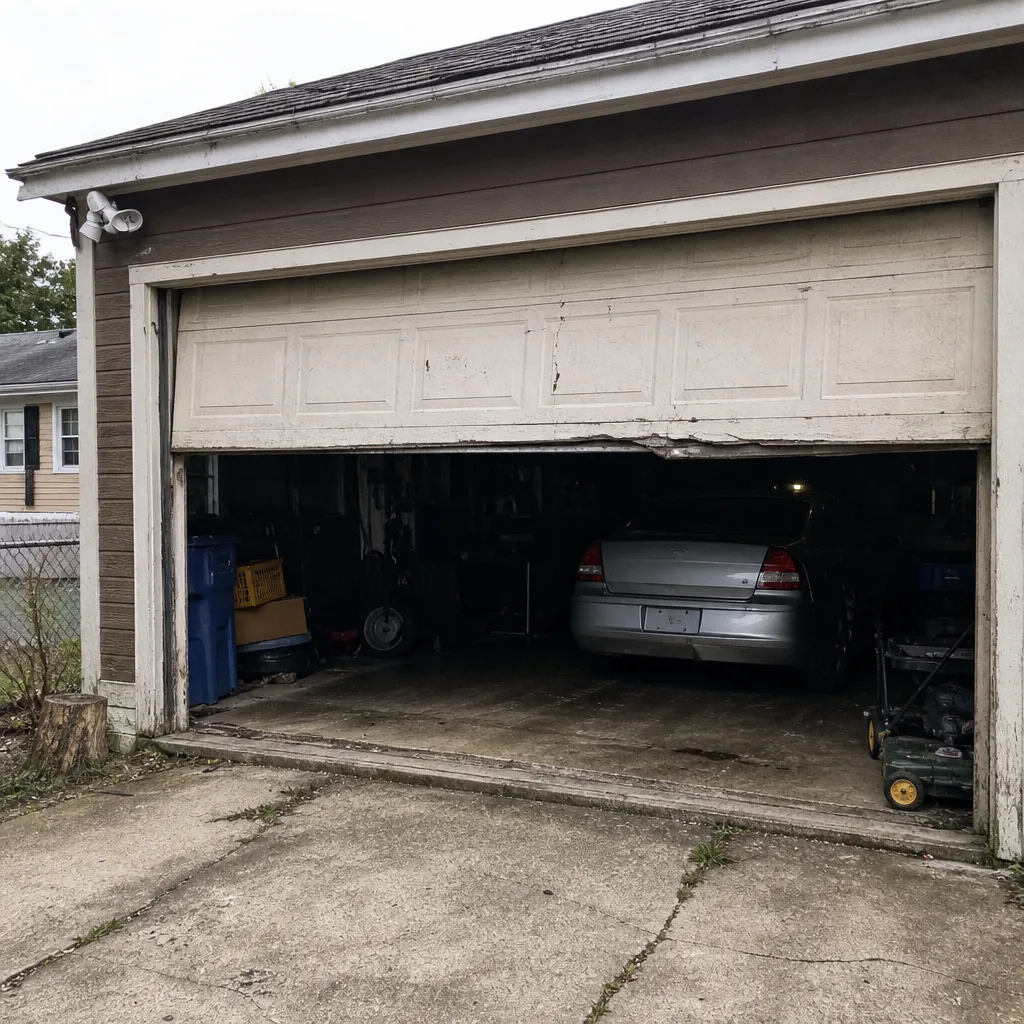 Before
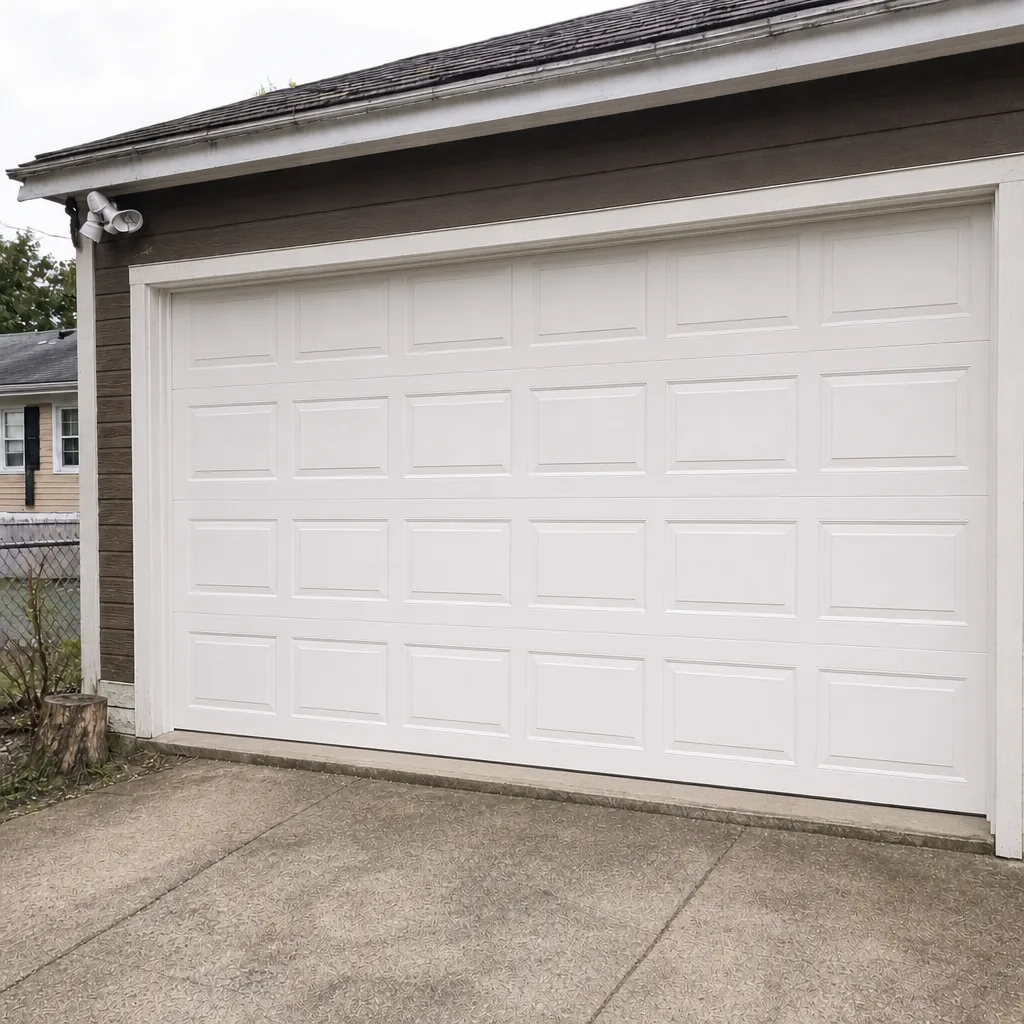 After
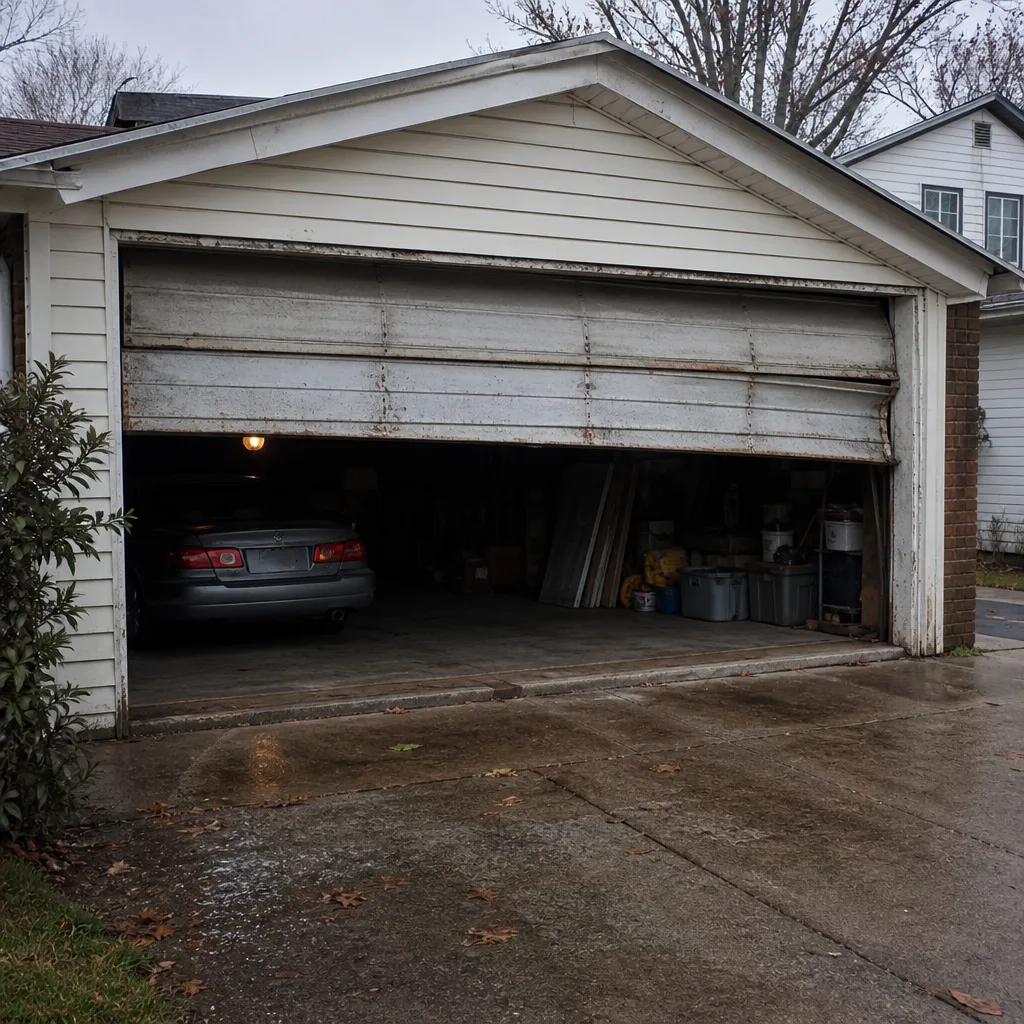 Before
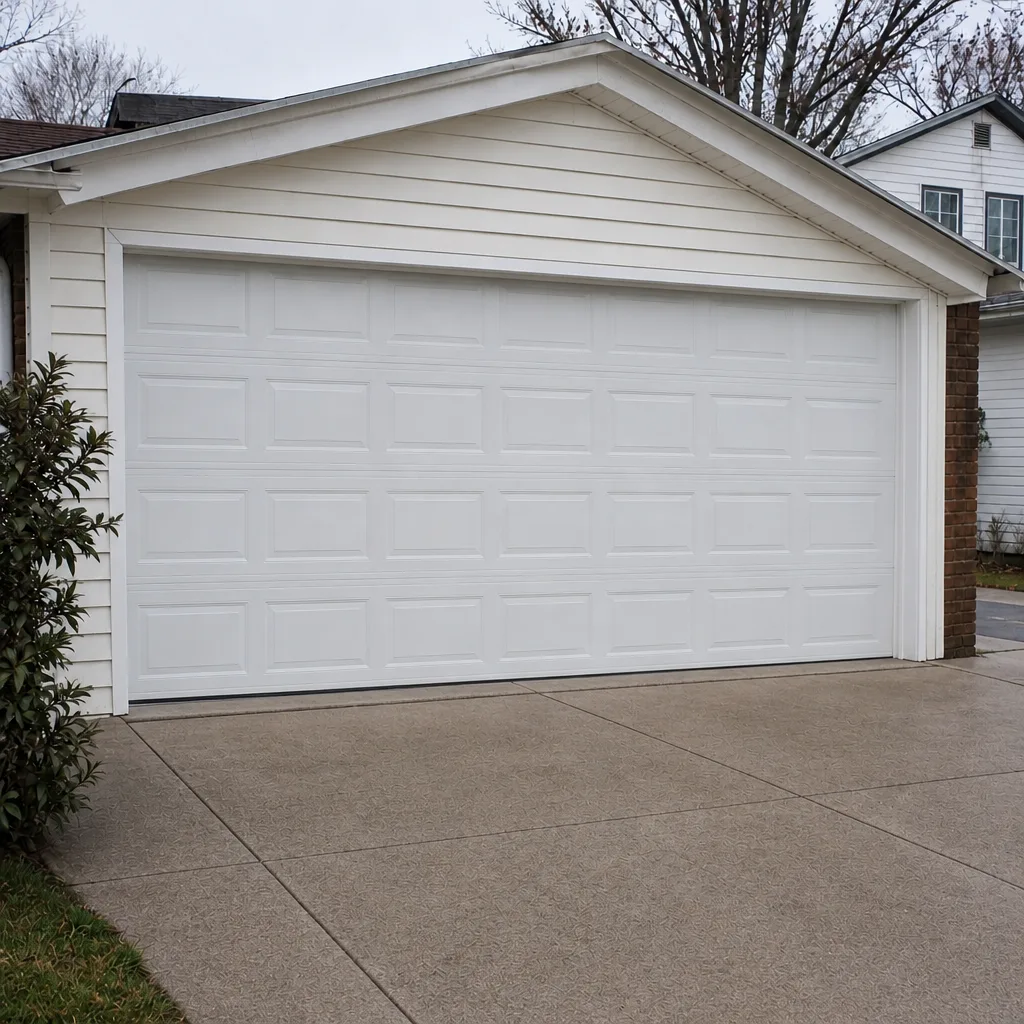 After
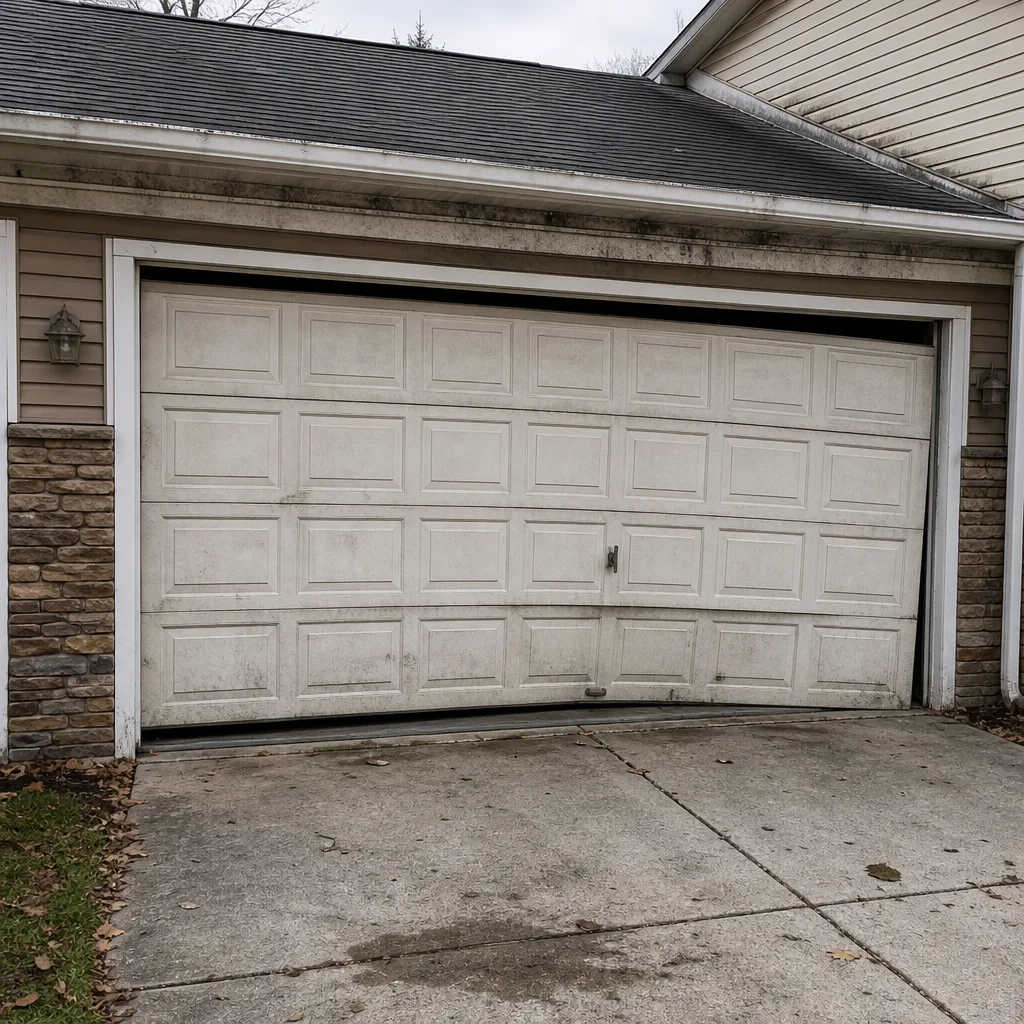 Before
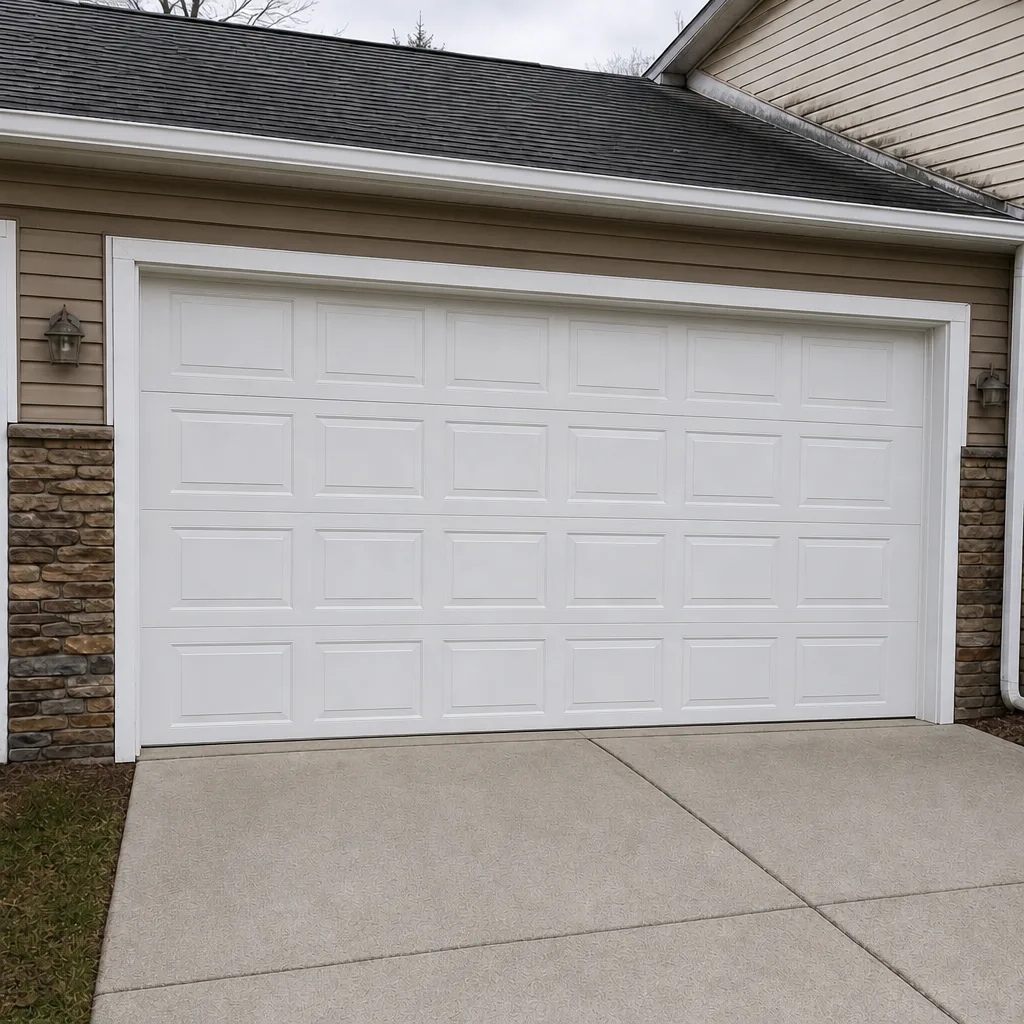 After
When to Call a Professional
Call us when the task involves a spring, a cable, a drum, or any door that’s already partially failed. Call us if the door won’t hold halfway, if a cable looks frayed, if the door reverses unpredictably, or if an opener hums without moving. Call us if you’ve started a DIY job and found something you didn’t expect. Call us before a spring failure turns into a call about a bent track or a stripped opener gear. And call us for full installation, because measuring, ordering, and calibrating a new door is a different job from maintaining an old one. Lawrenceville Garage Door Repair Pros offers free estimates in Lawrenceville – call (866) 984-8670. We answer 24/7. Fast dispatch from 7am to 7pm, Sunday through Friday, and we’re closed Saturday. Same-day service is often possible when the parts are in stock, and the written estimate sets the price before any work begins.
When you call, have the door’s model plate and the opener’s model number ready. It speeds up the diagnosis and it usually means the technician arrives with the right part. If you’re not sure what you have, the brand name or the model number is enough to start.
Is it cheaper to fix a garage door yourself or hire a professional?
For owner-level tasks like seals, rollers, hinges, and keypads, DIY is genuinely cheaper because the parts are inexpensive and the labor is your own. For springs, cables, and drums, professional work is usually cheaper in total cost, because a mismatched spring or a botched cable job turns a small repair into a larger one, and the injury risk isn’t priced into the DIY side at all. The written estimate tells you the real number on the professional side, and estimates are free.
Frequently Asked Questions
No. A torsion spring stores enough energy to cause permanent hand or arm injuries in under a second of contact, and winding it requires two proper winding bars and a controlled sequence that only comes with practice. Extension springs sit at lower tension but are still stored energy and still a professional job. Call (866) 984-8670 for a free estimate; we answer 24/7 and dispatch from 7am to 7pm, Sunday through Friday.
Bottom seals, roller and hinge replacement on a balanced door, keypad and remote programming, photo-eye alignment, lubrication, bolt tightening, and perimeter weatherstripping are all reasonable owner-level jobs. The only condition is that the door is balanced and the springs and cables are intact. If the door fails the halfway test, it’s not an owner job.
Disconnect the opener, lift the door halfway, and let go. If it holds position with light effort, the door is roughly balanced and safe for owner-level work. If it falls or rises on its own, the springs are out of balance, and no DIY work should start until that’s fixed. Check the springs for a visible gap and the cables for fraying before you do anything else.
Spring replacement is priced per spring, and a matched pair is usually replaced together, so a pair costs roughly twice a single spring. The written estimate gives you the exact number before any work starts, and the estimate is free. Call (866) 984-8670 for an exact quote; same-day service is often possible, we answer 24/7, and we dispatch from 7am to 7pm, Sunday through Friday.
No. The price is quoted and agreed before any work starts, and the written estimate sets the final price. If we find a related issue while we’re on site, we tell you about it and quote it separately, so you decide before anything extra happens. Call (866) 984-8670 for a free estimate; we answer 24/7.
Yes. The local professionals we connect you with are licensed and insured as required by Pennsylvania. Our technicians have up to 10 years of experience, and every job is scoped to garage doors specifically. Call (866) 984-8670 for a free estimate; we answer 24/7 and dispatch from 7am to 7pm, Sunday through Friday.
Repair is usually the right call if the opener is otherwise sound and the issue is a remote, a sensor, or a travel adjustment. Replacement makes sense when the drive gear is stripped, the logic board is failing, or the unit is well past its service life. Start by checking the door’s balance, because a lot of “opener problems” are actually door problems.
Often yes, but the risk is a universal substitute that doesn’t match your unit precisely. We source correct components across the residential garage door and opener brands listed in the brand sections above, so the repair uses the part built for your system. If you’re buying on your own, match the model plate on the door or opener before you order.
The Bottom Line
The DIY vs professional decision on a garage door comes down to consequence, not skill. Seals, rollers, hinges, keypads, photo-eyes, and lubrication are fair game for a careful homeowner with a balanced door. Springs, cables, drums, and any door that’s already partially failed belong with a trained technician, because the injury risk and the hidden mismatch costs are real. Lawrenceville’s seasonal swing makes spring failures common in early spring, so the condition check matters more here than in milder climates. If you’re unsure which side of the line your job falls on, a free estimate from Lawrenceville Garage Door Repair Pros settles it quickly. Call (866) 984-8670. We answer 24/7. Fast dispatch from 7am to 7pm, Sunday through Friday.
Written by the team at Lawrenceville Garage Door Repair Pros.